
Can You Refuse a Breathalyzer in Virginia? What Every Driver Should Know
Getting pulled over on suspicion of drunk driving is one of the most stressful moments you can face on the road. Your heart is pounding, the blue lights are flashing, and then the officer asks you to blow into a device. In that split second, a lot of people wonder the same thing: can you refuse a breathalyzer in Virginia?
The honest answer is “it depends” – and the reason it depends trips up more drivers than almost any other part of a DUI stop. Virginia actually uses two different breath tests, and they carry completely different legal consequences. Refuse the wrong one and you could lose your license for a full year with no way to drive to work. Refuse the other, and there may be no penalty at all.
We wrote this guide to clear up the confusion in plain language. We’ll walk through how Virginia’s implied consent law works, what really happens if you refuse, and when it makes sense to call a lawyer. None of this is legal advice for your specific situation, but it should help you understand the landscape before you ever need it.
Can You Refuse a Breathalyzer in Virginia? The Short Answer
Yes, you can physically refuse – but whether it’s penalty-free depends on which test and when. You can decline the handheld roadside test (the “preliminary breath test”) before an arrest with no automatic penalty. However, once you’ve been lawfully arrested for DUI, Virginia’s implied consent law requires you to take the official breath or blood test, and refusing that one is a separate offense that can suspend your license for a year.
That two-part answer is the whole ballgame, so let’s break down exactly why it works that way.
How Virginia’s Implied Consent Law Works
Here’s the part most drivers never learn until it’s too late. Under Virginia’s implied consent law (Va. Code § 18.2-268.2), the moment you drive on a public road in the Commonwealth, you’re automatically agreeing – in advance – to submit to a breath or blood test if you are arrested for driving under the influence.
Think of it like agreeing to obey the speed limit. You never signed a form, but by choosing to drive, you accepted the deal. The law applies to everyone operating a vehicle on Virginia highways, whether or not you hold a Virginia license.
Two details matter a great deal here:
- It kicks in after a lawful arrest – not during the initial stop. The consent applies once an officer has probable cause and has actually arrested you.
- There’s a three-hour window. The testing generally has to happen within three hours of the alleged offense.
Why does this law exist? Frankly, because refusing chemical tests used to be an easy way to dodge a DUI conviction. Prosecutors need blood alcohol content (BAC) evidence to prove impairment cleanly, and implied consent gives the state a tool to obtain it. That’s the “why” behind the whole system – and it’s why refusing after arrest is treated so seriously.
The Two Breath Tests in Virginia – and Why the Difference Matters
This is the single most important thing to understand, because confusing the two tests is where drivers get hurt. Virginia treats a roadside test and a station test as two entirely different things.
The Roadside Preliminary Breath Test (PBT)
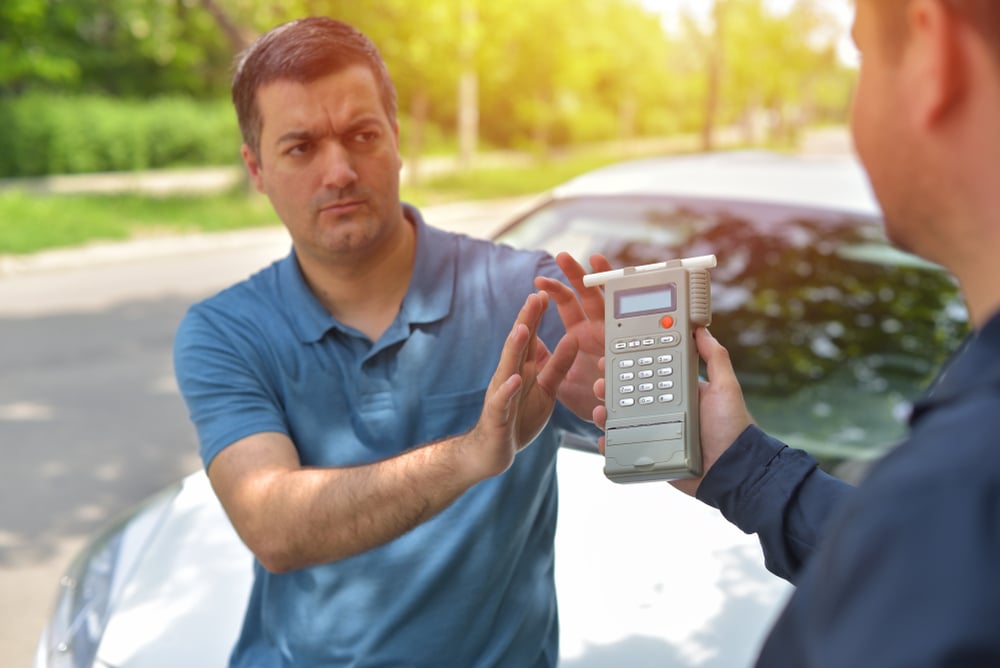
When an officer suspects you’ve been drinking, they’ll often ask you to blow into a small handheld device on the side of the road, usually alongside field sobriety tests (walking a line, following a pen with your eyes, standing on one leg). This is the preliminary breath test, or PBT.
Here’s the key point: the roadside PBT is voluntary. You are allowed to decline it, and – this matters – your refusal of the PBT generally cannot be used against you as evidence at trial. Police mainly use the PBT to build probable cause to arrest you in the first place. Roadside handheld units are also less accurate than the machines back at the station, which is part of why the law treats them differently.
So if the question is “can you refuse a breathalyzer in Virginia on the roadside before arrest?” – yes, and there’s typically no automatic penalty for doing so. You can still be arrested based on other evidence, but the refusal itself isn’t the trigger for a suspension.
The Post-Arrest Evidentiary Test
Once you’ve been lawfully arrested for DUI, the game changes completely. Now the implied consent law applies, and you’re expected to take the official breath test (on the larger, calibrated machine at the station) or a blood test in certain circumstances. Virginia generally prefers a breath test unless one isn’t available or you’re physically unable to give one, in which case a blood test may be used – often when drugs, not just alcohol, are suspected.
Refusing this test is not a simple personal choice. It’s a separate violation with its own penalties, entirely apart from the DUI charge itself. That’s the distinction that catches people off guard: they think refusing “the breathalyzer” protects them, when in reality they may be creating a second problem on top of the first.
What Happens If You Refuse a Breathalyzer in Virginia After Arrest?
If you refuse the official post-arrest test, you can be charged separately under Va. Code § 18.2-268.3. The consequences escalate depending on your history.
First-Offense Refusal
A first refusal is a civil offense – not a crime – but the penalty still stings:
- Your driver’s license is suspended for one year.
- This runs in addition to any suspension you receive if you’re also convicted of the underlying DUI.
- Crucially, this is often called a “hard” suspension: for that year, you generally cannot apply for a restricted license to drive to work, school, or medical appointments.
That last point is what makes a first refusal so disruptive. For many people, losing the ability to drive at all for a year affects their job and their family far more than the DUI charge itself.
Repeat Refusals
If you refuse again within 10 years of a prior refusal or DUI conviction, the stakes rise sharply. A subsequent refusal is prosecuted as a criminal misdemeanor rather than a civil offense, and can carry up to 12 months in jail, a fine of up to $2,500, and a three-year license suspension – again, generally with no restricted-license option during that period.
One important note on accuracy: sources vary somewhat on the exact misdemeanor classification for a second versus a third refusal, and these penalty details can change as laws are amended. Because the specifics depend on your record and the current statute, you should confirm the exact consequences you’re facing with a licensed attorney rather than relying on any single figure here.
Can a Refusal Charge Be Challenged? (How Defenses Work)
Yes – and this is where having an experienced Fairfax DUI lawyer can make a real difference. A refusal charge isn’t automatic just because you didn’t blow. For a refusal conviction to hold up, several things have to be true, and each one is a potential point of challenge:
- The arrest itself had to be lawful. The officer needed genuine probable cause to arrest you for DUI in the first place. If the stop or arrest was improper, the refusal charge that flows from it may fall apart.
- You had to be properly advised. The officer is required to read you the implied consent warning explaining the law and the penalties for refusing. If that advisement wasn’t given clearly, the case can be weakened.
- The request had to be clear and understood. Confusion, language barriers, or unclear instructions can matter.
- There may be a medical explanation. Sometimes a driver tries to comply but can’t produce a valid sample – for example, because of asthma or another condition. Virginia law recognizes this, though the burden is on the driver to prove it, which is why documentation and legal help matter.
In practice, refusal cases often turn on small procedural details that felt insignificant during the stop but become decisive in court. That’s exactly the kind of thing a seasoned defense attorney is trained to spot.
What to Do If You’ve Been Charged
If you’ve been arrested for DUI and refusal in Northern Virginia, a few practical steps can protect you:
Act quickly. Refusal cases move fast, and license consequences can begin before your first court date. Waiting rarely helps.
Don’t assume it’s hopeless – or automatic. Neither the DUI nor the refusal is a done deal simply because you were arrested. Both can be challenged.
Get your license situation straight. Once any suspension period ends, you’ll need to satisfy the state’s requirements to get back on the road. The Virginia DMV’s reinstatement page explains the steps, fees, and paperwork involved, which can include a compliance summary and completion of required programs.
Talk to a lawyer early. Because a refusal is a separate charge layered on top of the DUI – and because it can also intersect with other traffic violation issues – you want someone who handles these cases regularly reviewing the details.
The Bottom Line
So, can you refuse a breathalyzer in Virginia? You can decline the voluntary roadside PBT before arrest without an automatic penalty, but once you’re lawfully arrested, refusing the official test triggers its own consequences under the implied consent law – including a one-year “hard” suspension with no restricted license for a first offense. Understanding that distinction before you’re ever in that situation is genuinely valuable.
If you or someone you love is facing a DUI or refusal charge in Fairfax or anywhere in Northern Virginia, you don’t have to figure it out alone. Our experienced criminal defense team has spent decades helping drivers protect their rights, their records, and their ability to get behind the wheel again. When you’re ready to talk it through, schedule a confidential consultation and we’ll help you understand your options.
This article is general information, not legal advice. Laws and penalties can change, and every case is different. Please consult a licensed Virginia attorney about your specific situation.
Frequently Asked Questions
Is refusing a breathalyzer in Virginia the same as pleading guilty to DUI?
No. Refusing the post-arrest test does not automatically make you guilty of DUI, and it’s charged as a separate matter. However, refusing does not protect you from a DUI conviction either – police can still arrest and prosecutors can still pursue the DUI using other evidence, such as the officer’s observations, field sobriety results, or witness accounts. You may simply end up facing two problems instead of one.
Can I get a restricted license after a first-offense refusal?
Generally, no. Unlike some DUI suspensions where a restricted license may be available, a first-offense refusal typically carries a one-year “hard” suspension with no restricted-driving option during that period. That means no court-approved driving to work, school, or medical appointments for the full year. Because this is often more disruptive than the DUI penalty itself, it’s worth discussing your specific circumstances with an attorney right away.
Do I have to take the roadside handheld breath test?
No. The roadside preliminary breath test (PBT) is voluntary in Virginia, and declining it generally cannot be used against you as evidence at trial. Police use the PBT mainly to establish probable cause to arrest you. Keep in mind this is different from the official test at the station after arrest, which the implied consent law does require. Confusing the two is the most common and costly mistake drivers make.
How long do I have to act after a DUI and refusal charge in Virginia?
Sooner is better. Refusal cases tend to move quickly, and administrative license consequences can begin before your first court appearance. The earlier a lawyer can review how the stop, arrest, and implied consent advisement were handled, the more options you’re likely to have. If you’ve been charged in Fairfax or elsewhere in Northern Virginia, contact a DUI defense attorney as soon as possible to protect your rights and your license.
